

Understanding this deadly virus and its rapid detection methods is often the key to saving the lives of beloved cats (FPV Ag)
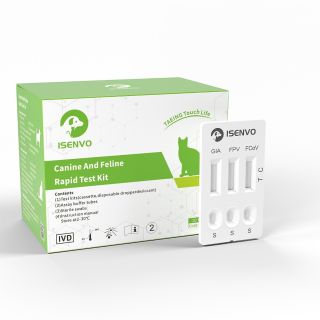
The first line of defense for protecting beloved cats: Isenvo FPV Ag rapid detection test strip with full analysis
For feline animals, Feline Panleukopenia, also known as feline plague (FPV), is undoubtedly one of the biggest threats to life. This virus has extremely high infectivity and mortality rates, especially for kittens whose immune systems are not yet fully developed.
In the race against time in the treatment process, Isenvo FPV Ag detection test strips have become a "protective weapon" for many pet owners and grassroots pet doctors due to their fast, convenient, and highly accurate characteristics.
What is FPV Ag detection?
FPV represents feline distemper virus, and Ag represents antigen. The significance of antigen detection lies in its direct detection of the presence of the virus itself in cat excrement. Unlike antibody testing (to see if there is immunity), a positive antigen usually means that the cat is currently in a period of viral infection and requires immediate intervention.
Why choose Isenvo FPV Ag detection test paper?
1. Colloidal gold immunochromatography (GICA) technology: using the mainstream lateral flow detection principle, just like the antigen self-test kit used by humans, the operation is simple and intuitive.
2. High sensitivity and specificity: It can accurately capture virus particles in feces in the early stages of viral infection, reducing the risk of missed diagnosis.
3. Rapid results: Results can be read in just 5-10 minutes, saving valuable time for clinical rescue.
4. Sample diversity: Supports the use of cat feces or vomit for testing, covering the two main excretion pathways of feline distemper.
How to use: Simple four steps
Using Isenvo test strips does not require complex laboratory equipment and can be done at home or in a clinic:
Step 1: Sampling.Use the cotton swab included in the packaging to collect fresh feces or vomit from cats (preferably rectal sampling).
Step 2: Dilution.Place the cotton swab into a test tube containing sample diluent, stir thoroughly, and allow the virus antigen to be fully released and dissolved.
Step 3: Sample addition. Use a disposable dropper to aspirate the upper clear liquid and steadily drip 3-4 drops into the sample hole (S hole) of the test card.
Step 4: Reading.Let it stand for 5-10 minutes.
Simultaneous staining of C-line and T-line:positive (infection).
Only C-line color development:negative.
C line does not show color: invalid, needs to be retested.
Warning signals for feline distemper: when should it be detected?
If your cat (especially those who have not been vaccinated or have not completed vaccination) shows the following symptoms, please immediately use Isenvo test strips for initial screening:
• Severe vomiting:often a clear sign in the early stages of the disease.
• Stubborn diarrhea:In the later stage, bloody, foul smelling and watery stools may appear.
• Extremely depressed: drowsy and unwilling to move around.
• Sudden fever or sudden drop in body temperature:body temperature exceeding 40 ° C or below room temperature.
• Refusing to eat and drink: even squatting by the water bowl without drinking water (typical posture of feline plague).
Expert Tip
Although the Isenvo FPV Ag test strip has a high accuracy rate, negative results cannot 100% rule out infection (such as during the incubation period or detoxification interval of the virus). If the cat's symptoms are severe but the test is negative, it is recommended to combine blood routine (to check for a significant decrease in white blood cells) or send it to the laboratory for PCR testing.
Summary:Cat plague is not scary, what's scary is delayed treatment. Preparing Isenvo FPV Ag test strips at home and testing them as soon as doubts arise, early detection, isolation, and treatment are mandatory courses for every responsible cat owner.







Validate your login