
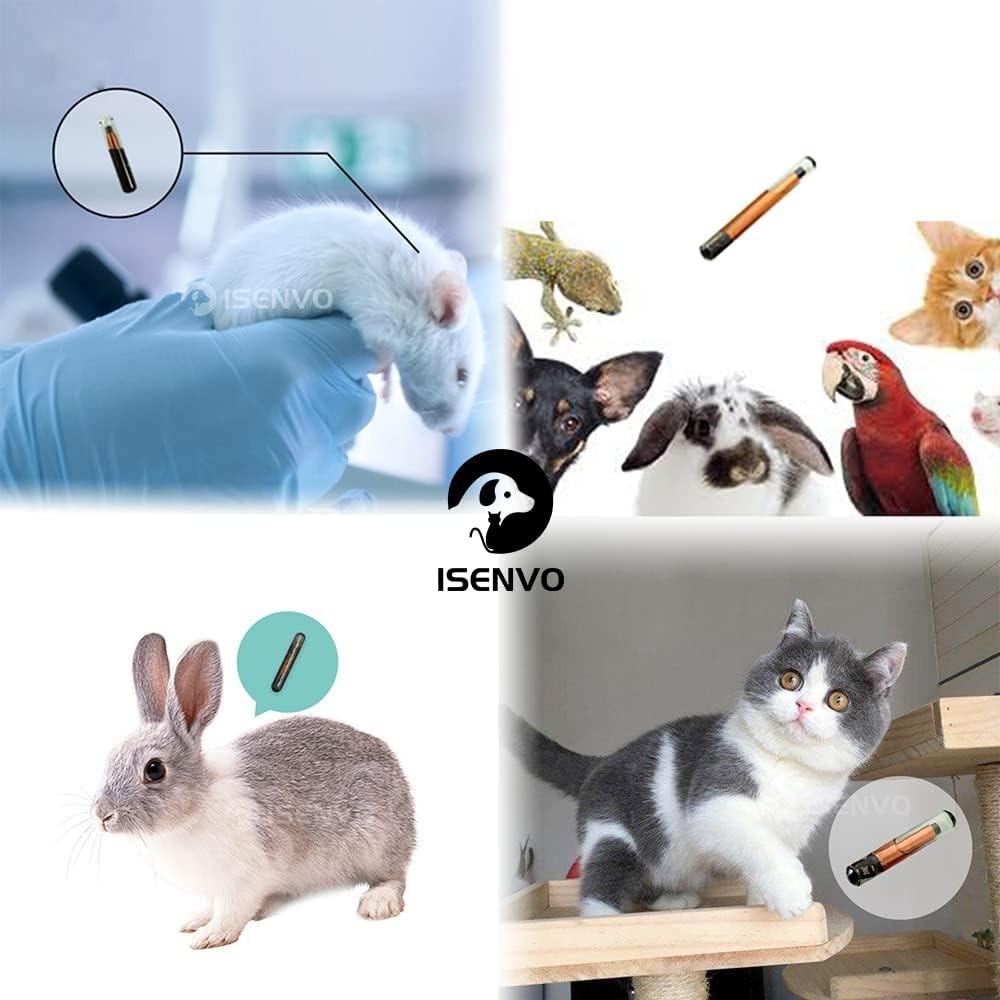
As a pet owner, the greatest fear is losing your furry friend by accident. While traditional collars and tags are useful, they can fall off or become damaged. This is where Isenvo pet microchips come into play.
If you're considering providing a "permanent" form of identity protection for your pet, or have just purchased Isenvo's product, this blog will give you a comprehensive understanding of this highly acclaimed pet safety tool in the market.
1. What is Isenvo pet microchip?
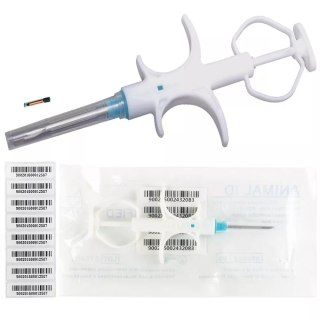
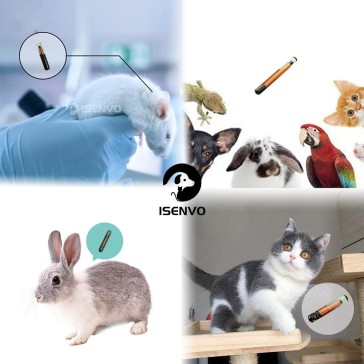
The Isenvo microchip is a radio frequency identification (RFID) device the size of a grain of rice. It is implanted under the skin between the shoulder blades on the back of the pet. Unlike GPS, it does not require batteries and does not emit signals. It only displays a unique 15-digit identification code when scanned by a dedicated reader.
Core specifications:Operating frequency: 134.2 kHz (compliant with the international standard FDX-B frequency).
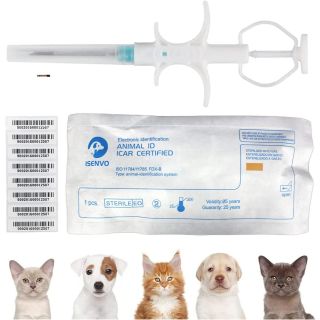
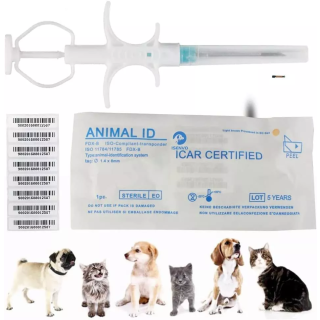
Compliance:Strictly follows ISO 11784/11785 international standards, which means that most scanners worldwide can read it, whether you take your pet to the clinic or travel abroad.
Certification:Certified by ICAR (International Commission for Animal Recording), ensuring safety and professionalism.
2. Why choose Isenvo?
Among numerous brands, Isenvo stands out mainly due to the following characteristics:
Painless implantation and safe materials
Isenvo offers multiple sizes (such as $1.25 \times 7\text{mm}$ or $1.4 \times 8\text{mm}$), and its ultra-fine injection needle greatly reduces the discomfort felt by the pet. The outer layer of the chip is wrapped with biocompatible glass and anti-slip film to prevent the chip from moving (migration) under the pet's skin.
Strong scanning ecosystem
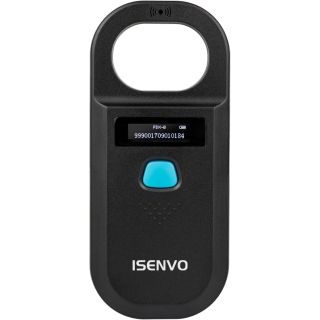
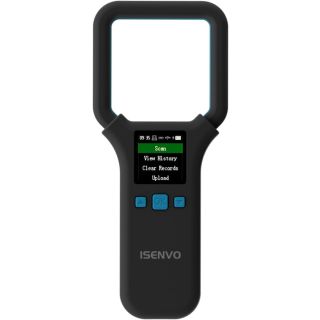
Isenvo not only produces chips, but its portable backlit scanners (such as the 190A/190C models) are also very well-known. These readers support USB charging, can store 128 records, and can upload data directly to a computer, making them ideal for multi-pet households, rescue stations, or small clinics.
Global versatility
Due to its compliance with international ISO standards, Isenvo chips are ideal for pets traveling across borders.
3. Key steps: The "big event" after implantation
Many pet owners mistakenly believe that implanting a chip is all there is to it. Remember: The chip itself does not store your personal information; it only stores a string of numbers.
Online registration:You must go to the Isenvo official website or mainstream pet file databases (such as 24Petwatch, etc.) to register. Bind the 15-digit number of the chip with your name, phone number, and home address.
Regular scanning:It is recommended to have your pet's veterinarian scan the chip during annual check-ups to ensure its location is normal and it can be read.
Update information: If you move or change your phone number, be sure to update it in the database, otherwise the chip will lose its "recovery" function.
4. Isenvo scanner vs. chip: Which should I buy?
For ordinary pet owners:You only need to contact a veterinarian to implant the Isenvo chip; there is no need to purchase a scanner yourself.
For families with multiple pets or breeders: Purchasing an Isenvo handheld scanner is very practical, as it allows you to confirm the identity of each animal at any time, especially when managing multiple small cats and dogs with similar appearances.
Conclusion:Implanting a microchip in your pet is a "lifelong insurance" that every responsible owner should consider. Isenvo, with its high cost-effectiveness, compliance with international standards, and well-equipped reading devices, has become a very safe choice at present.





Validate your login