
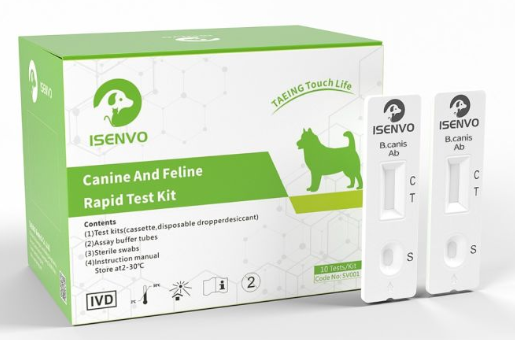
Dogs, as loyal companions of humans, have always played an indispensable role in our lives. However, their health issues cannot be ignored. In recent years, the emergence of Brucella canis antibody detection kits has provided a new means of ensuring the health of dogs, playing an important role in screening and assisting in the diagnosis of Brucella canis infection.
Background and significance of Brucella canis antibody kit
Brucellosis canis is a zoonotic infectious disease caused by Brucella canis, characterized by hidden bacteremia and reproductive disorders in dogs. This disease not only endangers the health of dogs, but may also pose a potential threat to humans, so early infection screening and auxiliary diagnosis are particularly important.
Brucella and infection routes
Brucella belongs to the Brucella family of the Proteobacteria phylum and is a Gram-negative parasitic bacterium that typically parasitizes within cells. This bacterium is transmitted through the digestive tract, and susceptible dogs may be infected through contact with infected animals, secretions, or ingestion of feed and water contaminated with the pathogen. Most dogs exhibit latent infections, but there are also a few cases that manifest as acute and chronic acute diseases, leading to clinical symptoms such as miscarriage, infertility, and sterility.
Rapid immunochromatography technology: detecting Brucella antibodies in dogs
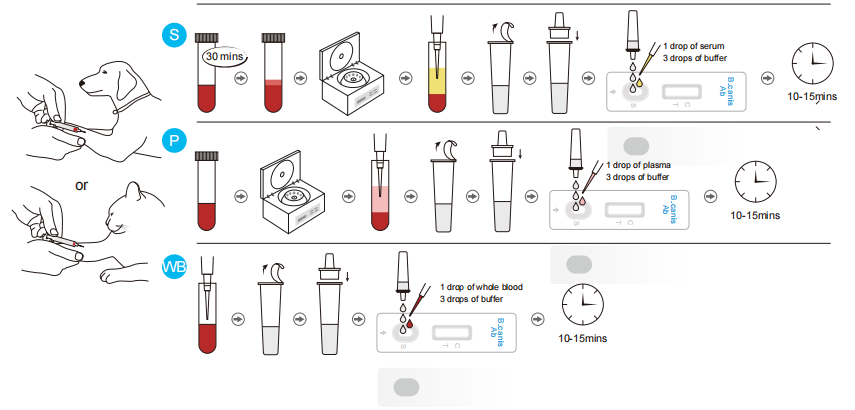
The Brucella canis antibody kit adopts rapid immunochromatography technology, which is an efficient and sensitive detection method. During the detection process, diluted dog whole blood or serum samples are dropped into the reagent kit. If Brucella antibodies are present in the sample, they will bind to specific proteins labeled with colloidal gold, form complexes, and move on the chromatography membrane. On the detection line, these complexes will be captured, resulting in wine red lines in the detection result window. If the sample does not contain Brucella canis antibodies, this line will not appear.
Sample requirements and testing methods
To ensure the accuracy of the detection, the reagent kit is only suitable for dog whole blood or serum samples. When collecting samples, it is necessary to use fresh samples and quickly put them into the diluent. The diluted sample should be tested within 1 hour as soon as possible. If immediate testing is not possible, it can also be stored at an appropriate temperature. The detection process is relatively simple, which requires dropping the sample into the reagent kit and waiting for a period of time to determine whether the sample contains Brucella canis antibodies based on the appearance of the wine red line.
Interpretation and significance of test results
According to the instructions for using the reagent kit, the test results are divided into three categories: negative, positive, and invalid. A negative result indicates that the sample does not contain Brucella antibodies, while a positive result indicates that the sample contains the antibody, which may be a sign of infection. Invalid results may be caused by improper operation or reagent failure, and in this case, retesting is necessary to ensure the accuracy of the results.
Conclusion
The emergence of the Brucella canis antibody detection kit provides a more comprehensive guarantee for the health of dogs. Through simple and reliable detection methods, we can detect and diagnose Brucella infection in dogs early, take appropriate treatment measures, protect the health of dogs, and reduce the risk of zoonotic diseases. In the future development, we have reason to believe that technology will further advance the field of pet healthcare, allowing our partners to enjoy a better quality of life.





Validate your login